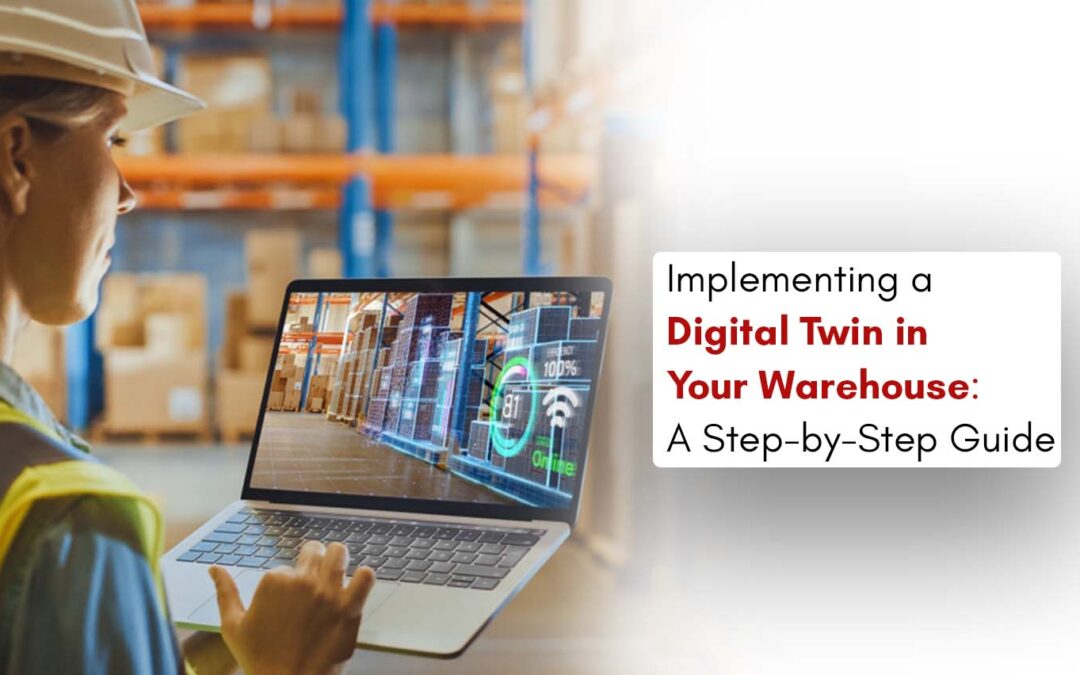
In today’s fast-moving supply chain environment, warehouses are under immense pressure to operate faster, smarter, and more efficiently. As customer expectations rise and logistics become increasingly complex, businesses are turning to advanced technologies to streamline operations. One such transformative innovation is the Digital Twin.
A Digital Twin is not just another buzzword, it is one of the most powerful tools available for modern warehousing. By creating a virtual replica of your warehouse, you can simulate workflows, optimize layouts, predict issues, and make data-driven decisions with confidence. If you’re considering adopting this technology, this step-by-step guide will help you understand how to implement a Digital Twin in your warehouse effectively.
What Is a Digital Twin in Warehousing?
A Digital Twin is a dynamic, real-time virtual model of your physical warehouse. It captures data from equipment, sensors, inventory systems, and people to give you a clear, constantly updated picture of how your warehouse operates.
With this digital replica, you can:
- Simulate new layouts before changing the real warehouse
- Predict equipment failures
- Optimize workforce allocation
- Analyze workflow bottlenecks
- Improve overall productivity and reduce operational costs
Digital Twins empower warehouse managers to make smarter decisions without the risk of disrupting daily operations.
Why Digital Twins Are Transforming Warehousing
Before diving into the implementation process, it’s important to understand why Digital Twins are gaining popularity in warehousing:
- Real-Time Visibility – Monitor operations minute-by-minute, from inventory levels to equipment health.
- Predictive Maintenance – Spot potential failures in forklifts, conveyors, or sensors before they disrupt workflow.
- Warehouse Layout Optimization – Test different layouts virtually to reduce travel time and enhance storage efficiency.
- Better Workforce Efficiency – Simulate staffing needs to reduce overstaffing or understaffing.
- Cost Savings – With fewer errors, less downtime, and better planning, Digital Twins drive significant savings.
A Step-by-Step Guide to Implementing a Digital Twin in Your Warehouse
Implementing a Digital Twin is not as complicated as it may seem. With the right approach, your warehouse can experience a smooth transition into a smarter, data-driven environment.
Step 1: Assess Your Warehouse Needs
Every warehouse operates differently. Start by identifying:
- Key challenges (e.g., bottlenecks, inaccurate inventory, slow picking volumes)
- Operational goals (e.g., faster dispatch, reduced errors, automation planning)
- Existing systems and gaps
- Integration capabilities with WMS, ERP, or IoT devices
This assessment will define what your Digital Twin should focus on, whether it’s layout optimization, demand forecasting, equipment tracking, or complete operational simulation.
Step 2: Gather Accurate Warehouse Data
A Digital Twin is only as powerful as the data behind it. Begin collecting:
- Warehouse dimensions and 3D layout
- Inventory data and SKUs
- Equipment details (forklifts, conveyors, storage systems)
- Workforce schedules and productivity data
- WMS/ERP information
- IoT or sensor-generated data (if available)
If you don’t yet use sensors or automated tracking tools, this is a good time to consider adding them, especially RFID tags, camera-based tracking, or IoT sensors.
Step 3: Choose the Right Digital Twin Platform
Not all Digital Twin technologies are created equal. Look for:
- Scalability – Can it grow with your warehouse?
- Integration options – Does it integrate with your existing WMS, ERP, or automation tools?
- Real-time simulation – Can you test scenarios without disrupting operations?
- User-friendly interface – Can your team use it without extensive training?
- Analytics capability – Does it offer predictive insights and reporting?
Popular Digital Twin platforms include solutions built into advanced WMS systems, 3D mapping software, and industry-specific digital twin suites.
Step 4: Build the Warehouse’s Digital Model
Once your platform is selected, the next step is constructing the virtual replica of your warehouse.
The model should include:
- Racks, aisles, shelves, loading bays
- Picking zones, staging areas, sorting lines
- Equipment movement paths
- Worker activity patterns
- Inventory flow and cycle times
At this stage, you’re essentially creating an accurate 3D map of everything that happens inside your warehouse.
Step 5: Integrate Real-Time Data
A true Digital Twin works with live data. Integrate:
- IoT sensors for equipment
- Barcode or RFID tracking for goods
- Automated picking and sorting systems
- WMS and ERP data
- Workforce management systems
Once connected, your Digital Twin becomes dynamic, reflecting every movement, update, or change happening inside the warehouse.
Step 6: Run Simulations & Test Scenarios
This is where the real value of a Digital Twin comes in.
You can simulate:
- New warehouse layouts
- Pick-path optimizations
- Seasonal demand spikes
- Workforce schedules
- Stock placement strategies
- Equipment maintenance planning
These simulations help you experiment freely, without interrupting daily operations or risking costly mistakes.
Step 7: Identify Improvements and Implement Changes
Based on the insights from the simulations, pinpoint:
- Bottlenecks
- Capacity issues
- Inefficient layouts
- Equipment that needs maintenance
- Slow-moving inventory placements
- Opportunities to automate
Then implement changes gradually, monitoring their real-world impact through the Digital Twin.
Step 8: Continuously Optimize
A Digital Twin is not a one-time project, it is a continuous improvement tool.
Use it regularly to:
- Plan for future expansions
- Forecast stock requirements
- Prepare for peak seasons
- Improve throughput
- Reduce labor fatigue and travel distance
- Align with long-term operational goals
With time, the Digital Twin becomes the brain of your warehouse.
Conclusion
Implementing a Digital Twin in your warehouse is more than an upgrade, it’s a strategic move towards smarter, more resilient supply chain operations. From predictive insights to layout optimization and improved workforce productivity, Digital Twins are reshaping how warehouses function.
As warehousing continues to evolve with automation, robotics, and AI, Digital Twins will play a central role in creating fully optimized, future-proof facilities. If your goal is to improve efficiency, cut costs, and make smarter decisions, now is the perfect time to embrace this advanced technology.