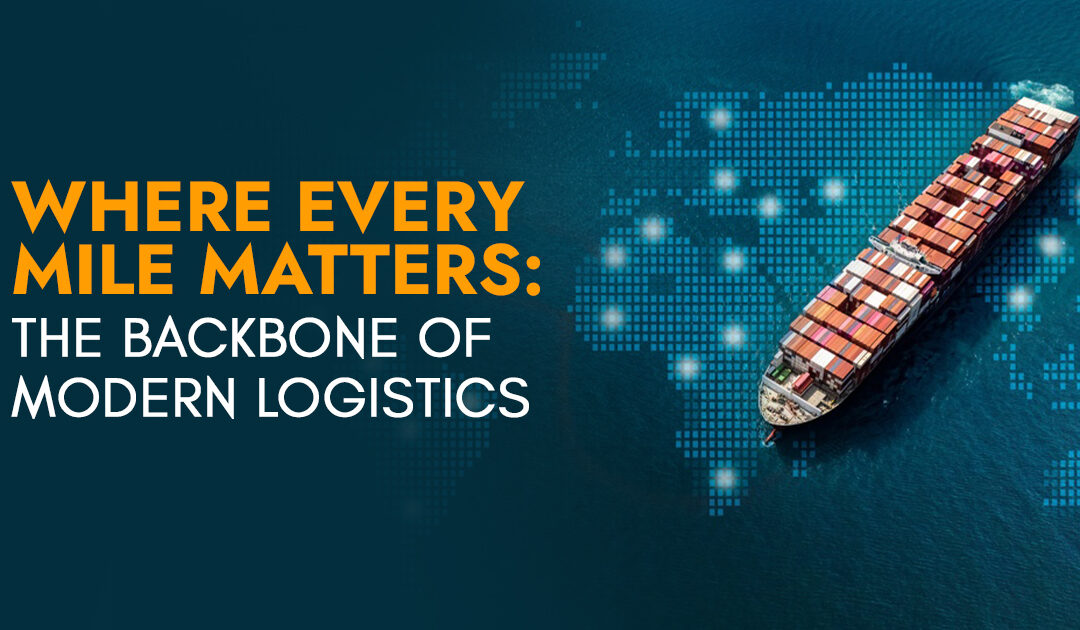
Logistics is responsible for almost everything we have in our lives today. From the food we eat and the medicines we take, to online shopping deliveries, clothes, building materials, etc., nothing reaches us without logistics. Even simple daily items like rice, milk, vegetables, and fruits travel through a long process before coming to us. Behind every product on a store shelf or every parcel delivered to a doorstep, logistics works quietly in the background. Without it, daily life would slow down, businesses would struggle, and access to essential goods would become uncertain.
At its core, logistics is about moving things in the right way. It involves planning, transporting, storing, and delivering goods from one place to another. What makes modern logistics truly reliable is the importance it gives to time and distance. When these two are managed properly, everything works well. When they are ignored, delays, shortages, and confusion begin. This careful handling of time and distance is what gives logistics its strength and stability. It is this discipline that forms the backbone of modern logistics.
Understanding the Role of Logistics
Logistics is the process of planning, moving, storing, and delivering goods from one place to another. It connects manufacturers, suppliers, warehouses, and customers into one continuous flow. Modern logistics goes beyond transportation. It involves coordination, timing, route planning, and constant monitoring to ensure goods reach the right place in the right condition. It supports trade, healthcare, food supply, and almost every industry we depend on in our daily lives.
Why Time and Distance Matter So Much in Logistics?
Logistics is a time-sensitive industry. A delay at one point can affect the entire supply chain. Similarly, inefficient routing or poor distance planning can increase costs, fuel consumption, and delivery failures. Even a small delay or a poorly planned route can create problems much further down the journey.
That is why successful logistics companies focus on two essentials:
Time – ensuring goods move and arrive as scheduled
Distance – choosing the most efficient routes to avoid waste and delay
When both are managed well, operations become faster, safer, and more cost-effective.
How Time Matters?
Time plays a crucial role in logistics. Every shipment follows a clear timeline – from pickup and transit to storage and final delivery. A delay at any stage can disrupt production schedules, reduce store availability, and weaken customer trust. Medicines may arrive late, factories may pause work, or shops may go empty. That is why logistics companies treat time with utmost seriousness and care. In logistics, time lost often means opportunity lost. Being punctual is not just a promise, it is a responsibility. By respecting time at every stage, logistics providers maintain trust and reliability, the two qualities businesses depend on most.
How Distance Matters?
Distance is just as important as time. Logistics is not about travelling long distances without thinking. It is about choosing the best and shortest routes possible. Poor route planning wastes fuel, increases costs, and causes delays. Smart distance planning saves time, reduces expenses, and keeps deliveries smooth. Every kilometre saved reduces effort, cost, and risk..
How Time and Distance Together Form the Backbone?
Time and distance are closely linked in logistics. Covering long distances without proper time planning leads to delays, while managing time without considering distance increases costs and uncertainty. True efficiency comes only when both are planned together. This balance forms the backbone of logistics, supporting consistent deliveries, predictable supply chains, customer satisfaction, and strong business relationships. But logistics is not just about systems and routes. Behind every order is a real human waiting, a patient hoping for medicine, a shop owner waiting to open his shop, or a family waiting for daily essentials. When logistics work well, life continues smoothly. When it doesn’t, everyday routines are disrupted!
Why Every Mile Truly Matters?
Every mile in a logistics journey carries responsibility. Each mile affects delivery time, fuel use, cost, and reliability. A poorly planned mile can cause delays later, while a well-managed mile keeps the entire journey on track. That is why logistics companies pay attention to every stretch of the route, not just the start and end points.
Final Thoughts
Effective management of time and distance forms the backbone of logistics, as every delivery depends on how far goods travel and how quickly they reach their destination. When both are managed well, supply chains run smoothly and people get what they need without delay. That is why every mile matters, because each mile directly affects time, cost, reliability, and the final delivery experience.
Conclusion
Managing time and distance is not just about efficiency, it is about responsibility towards people. While most people only notice the final delivery, logistics work quietly in the background every single day to keep life moving smoothly. When every mile is planned with care and every minute is valued, logistics becomes more than transportation.